


With hallux valgus, a comprehensive approach to eliminating the defect is required.In addition to massage and healing exercises, regular wearing of sandals, boots and boots of a special design is required.
An orthopedic doctor will choose the best orthopedic shoe option for your child.If you have hallux valgus, parents should know which shoes and boots reliably fix the ankle and how to wear special shoes correctly.Useful information: How to prevent the appearance of a flat valgus foot if you need to consult a pediatric orthopedist.
Hallux valgus: what is it?
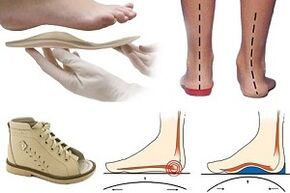
Orthopedic diseases are diagnosed in children of different ages, more often in the first years of life during the formation of the musculoskeletal system.Weak bones, insufficiently strong muscles and incorrectly chosen footwear change the appearance of the foot.Calcium deficiency and certain diseases (rickets) are often the causes of the disease.
Signs of pathology:
- with knees tightly clenched to the inside of the ankles, the distance is 50 mm or more;
- An X-shaped change in the child's foot is noted, there is a visible flexion of the leg joints.
- Toes, heel points upwards, the axis is clearly curved;
- The deformation has a negative effect on the general condition of the child: the legs hurt when walking and swell in the evening.
If you complain of pain in the legs or rapid wearing of shoes, carefully examine the feet and check whether the child has symptoms of plano-valgus deformity.The slightest suspicion of a problem with joints or muscles is a reason to see an orthopedist.The sooner corrective models replace regular boots and sandals, the easier it is to correct the deformity.Remember: curvature of the lower extremities is not only unsightly, but also harmful to health.
Features of corrective shoes
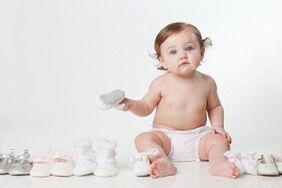
Special sandals, boots and boots look like traditional models.Fashionable, beautiful shoes have long since replaced the inconspicuous models that children had to wear a few decades ago.
Characteristics:
- Anti-valgus shoes reliably fix the ankle and ankle joint.A special design corrects the mobility of the joints of certain bones and stops deformation;
- Corrective models are easily recognizable by their high top, which firmly fixes the lower and upper parts of the ankle;
- all models have a removable insole that ensures the correct alignment of the longitudinal arch of the child's foot;
- In case of serious pathologies, a master makes an insole in a special laboratory.Parts of orthopedic products are made to individual order.An instep support is not a foam protrusion;When making it, the master forms a bulge taking into account the anatomical features of the lower limbs of a small patient.
- Thomas' orthopedic heel prevents the foot from turning inwards.The heel is longer on the inside.Conventional elements are not suitable for correcting orthopedic pathologies of the lower extremities.
The benefits of orthopedic shoes
Regularly wearing orthopedic children's shoes improves the condition of the feet:
- joint deformations are stopped;
- after a certain time the joints assume the correct position;
- During treatment, orthopedic shoes prevent pain and heaviness in the legs.
- the psychological condition of the little patient improves, irritability decreases due to constant discomfort when walking.
Information for parents!The maximum benefit for deformed areas is achieved by using anti-valgus shoes not only on the street but also at home.Replace soft slippers with corrective sandals.Controlling the position of the foot accelerates recovery and eliminates the defect.The ratio of the use of normal and corrective shoes is determined by an orthopedist depending on the severity of the disease.
How to choose: useful tips for parents
Before purchasing special shoes or boots, be sure to consult an orthopedist.The range of corrective shoes includes dozens of models.Without a doctor's prescription, parents cannot choose the right treatment option.
When choosing, be guided by the following requirements:
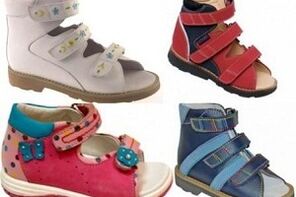
- Buy models made of high-quality genuine leather.Most models fit close to the leg and have a high hem.Consequences of using low-quality substitutes: feet sweat, slip, fungal diseases develop;
- Check the quality of the sole.An elastic base with good shock absorption is ideal.Avoid stiff, hard soles: muscles, joints and mobile joints do not work when walking and gradually relax.Always flex the sole of your boots or boots.In the front part the base should be flexible, in the back part it should be stiffer, but not bend in the middle.If you were unable to compress the base, look for another model.Most orthopedists believe that the ideal sole for corrective shoes is made of rubber;
- The tip of an orthopedic product should not create too much space for the toes, but also should not put pressure on them.It is forbidden to purchase corrective sandals/boots for growth: the product must fit snugly on all parts of the foot;
- A closed heel counter is an essential part of good orthopedic shoes.Even summer versions always have a small heel that covers the heel.Why are open sandals not suitable for children with orthopedic problems?The reason is obvious: when walking, the heel moves, “fidgets”, there is no strong fixation and the deformation of the joints increases.Proper heel placement prevents your little feet from bending.Overweight children should only wear sandals with a closed back.
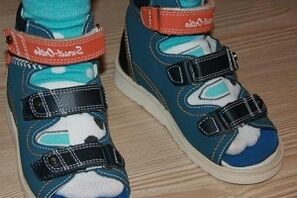
Pay attention to the photo of orthopedic shoes for flat valgus feet.All models are similar in many ways, there are slight differences in design and strap width.Even a layman can easily determine: corrective sandals, boots, boots reliably repair a child's foot.
Manufacturer
Many doctors and parents comment positively on the effect of special correction products with firm fixation, a stiff back, a special heel and an instep support.Various models from well-known manufacturers are available on the market.Pay attention to the products of companies that produce quality products in accordance with orthopedic product standards.
Disease prevention
Think about preventing orthopedic problems before they occur: some diseases and ailments increase the risk of pathologies in children.Unfortunately, the tendency to hallux valgus is inherited.
Risk group:
- weak premature babies;
- babies who suffered from pneumonia or ARVI in the first year of life;
- Children with manifestations of rickets.
Parents should closely monitor the condition of the baby's lower extremities if the expectant mother did not receive enough calcium and phosphorus, spent little time outdoors, rarely took multivitamins and mineral complexes, or had a poor diet.The condition of the newborn's musculoskeletal system directly depends on the adequate intake of vitamins and minerals during pregnancy.
The following measures will help minimize the risk of hallux valgus:
- proper nutrition during the birth of a child, monitoring the course of pregnancy for timely detection of neurological problems;
- Prevention of rickets in newborns: breastfeeding, taking foods containing calcium and phosphorus at 8-9 months of age;
- Regular consumption of fish oil improves the absorption of vitamin D and saturates the body with vitamins and minerals for strong bones, teeth and muscles.
- Useful exercises for the legs and foot massages are effective measures for the prevention of orthopedic diseases.The little one should go barefoot more often: sand on the beach, pebbles, uneven surfaces are excellent opportunities for a natural effect on muscles and joints;
- For the first steps, buy sandals, sandals, closed-toe shoes.The sole must be non-slip and have a mandatory heel.For children up to a year, a heel with a height of 5 to 7 mm is recommended, after two years - from 1 to 1.5 cm;
- Ride a bike.To prevent/treat flat feet and hallux valgus, the child should wear socks or shoes with flexible soles;
- A massage mat for children is an ideal device for preventing flat feet and the development of hallux valgus.The product is sold in pharmacies and children's stores, a wide range is presented on online trading platforms;
- The Swedish ladder is another easy way to prevent orthopedic problems.When climbing on round bars, the foot is flexed, tensed and the entire muscles are stressed.Parents must show how to safely climb up and down the wall bars.During lessons it is important to stay close to the child to avoid falls;
- dosed load on fragile legs.Sometimes parents try to teach the baby to walk as early as possible;At 7-8 months they “lead” the baby and support it under their arms.You can't fight nature, put an unbearable strain on weak muscles and joints: orthopedic problems in such cases are the direct fault of the parents;
- Only buy high-quality shoes for your children.Products made of genuine leather with a flexible rubber sole are more expensive, but cheap sandals or boots cause many problems with the musculoskeletal system.Treatment of orthopedic diseases often takes years;
- Take your child for regular medical examinations with specialists.Do not refuse to visit a pediatric surgeon or orthopedist: timely detection of pathologies prevents serious joint deformities.
Do not refuse to purchase corrective shoes and do not hope that special exercises and massage will completely eliminate flat valgus foot.The price of orthopedic shoes is quite high, but without special products it is impossible to cure an orthopedic disease.
Buy shoes for your baby at a young age that take the anatomical features of small feet into account and prevent the development of orthopedic defects.If hallux valgus is detected, purchase high-quality sandals, shoes and boots with corrective functions on the advice of an orthopedist.Remember: an integrated approach to the treatment of orthopedic diseases necessarily includes an element such as regular wearing of special shoes.